

As powerful and beautiful as fireworks.
A new standard in lubrication technology - HANABI LUBE
To go beyond the limits of engines, HANABI continues to innovate in lubrication technology.
It delivers reliable performance even under high temperature, heavy load, and high-precision conditions.

Meaning of HANABI
HANABI,
as powerful as fireworks.
HANABI (花火) is a Japanese word meaning "fireworks," composed of the characters for "flower" (花) and "fire" (火), literally translating to "fire blooming like a flower." This term goes beyond simply meaning fireworksit has become a cultural symbol and emotional memory representing the Japanese summer.
The HANABI brand embodies the image of these fireworks, delivering a powerful yet beautiful performance to the world. We pursue the passion and energy that bloom at the pinnacle of technology, striving for a light that is sustainable, not just momentary. HANABI is more than a lubricant manufacturer; it is a flame of sustainable innovation connecting industry,echnology, and the environment.

The quality of HANABI Lube Experience the quality of HANABI Lube, which uses advanced Group 3 base oil and global additivessupplied to major automobile OEMs, construction equipment companies and global manufactures.


Research and Development Labs for HANABI LUBE

Dr. Yasuhiro Murakami
Fellow, Society of Automotive
Engineers of Japan: JSAE

Dr. Takashi Kaimai
PhD. from Lubrication Laboratory of
Imperial College, London

Dr. Hitoshi Hamaguchi
Diploma of the Membership
Imperial College, London
“A brand leading the global market with sustainable
lubrication technology.”

Mission
HANABI leads innovation in Japan’s lubricant and chemical industries with accumulated technology and quality, establishing itself as a premium brand setting new standards in the global market.

Vision
Through technology, we make the world move more sustainably and efficiently. HANABI drives the future of industry with high-performance lubrication technology and leads global environmental standards.

Core Value
With advanced lubrication technology and eco-friendly solutions, we pioneer sustainable industrial innovation while building trust through customer-centric tailored services and global-standard quality.
Product Lineup
Premium Engine Protection, Peak Performance
Optimal viscosity and advanced synthetic technology protect your engine, reduce wear, and boost efficiency—whether in city traffic or on the highway.
 |  |  |  |  |
|---|---|---|---|---|
 |

PAO1

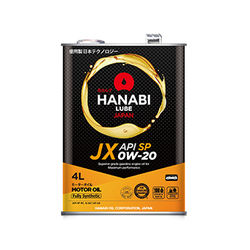
JX SP

HDX CI-4

HDX CH-4

ATF DX-lll

CVTF

Gear GL-5

Motorcycle 4T

Hydraulic HL

HANABI PAO 1
with PAO Boosting Technology
PAO Boosting Technology of HANABI provides a powerful and comfortable
driving experience with PAO Strength.
HANABI helps you enjoy a premium performance by powerful PAO
Strengthening Viscosity Properties
It maintains low-temperature viscosity by slowing down crystallization at low temperatures and maintains high-temperature viscosity by increasing the bonding force between molecules at high temperatures.
Global Leader in GIII Base Oil
Group III
These oils are greatly hydrocracked.
This longer process is designed to achieve a purer base oil.
Although made from crude oil, Group III base oils are sometimes described
as synthesized hydrocarbons, or synthetic technology.
Group IV
Group IV base oils are poly-alpha-olefins (PAOs). These synthetic base oils are made
through a process called synthesizing.
They have a much broader temperature range and
are great for use in extreme cold conditions and high heat applications.
Organic Friction Modifier - GMO (Glycerol Monooleate)

Glycerol monooleate (C21H40O4) is a clear amber or pale yellow liquid. It is an oil-soluble surfactant and is classified as a monoglyceride. It is used as an antifoam in juice processing and as a lipophilic emulsifier for water-in-oil applications. It is a moisturizer, emulsifier, and flavoring agent. Various forms of glycerol oleate are widely used in cosmetics and it is also used as an excipient in antibiotics and other drugs.
However, glycerol monooleate (GMO) has linear molecular structures, which significantly improve the tribological performance. GMO has been widely used in lubricant oils as a friction modifier, and excellent lubricating performances were observed, such as the ultra-low friction obtained between two metal surfaces with oil.

Technology that Enriches the Earth and the Future
Sustainable performance, for the future of our planet — this is HANABI’s promise.
HANABI is reducing CO₂ emissions in its manufacturing processes and developing lubricants made from plant-based and renewable raw materials. The company has acquired ISO 14001 certification and complies with global ESG standards.
Manufacturing &
Distribution Process
The process from HANABI lubricant production to customer delivery

Step 1
Delivery of raw materials
All crude oil and raw materials are delivered to major production plant pipelines via ships and trucking.

Step 3
Lube oil blending
Three automatic blenders :
Simultaneous metering blender up to handle larger quantities.

Step 5
Pouring and Packing
Five lines: one for 1L, 4L, and 20L cans each plus two lines for filling 200L drums.

Step 2
Raw materials storage
Each tank is connected to the production shop with a separate pipeline
to minimize flushing of the entire network.

Step 4
Laboratory
The laboratory is equipped according to the latest standards to ensure quality control at all production stages.

Step 6
Storage facilities
8,000 pallet positions plus
five truck loading docks.
